
So, what will the global economy look like in 2021? In a review of Western financiers' forecasts for 2020, there were the following words: “Economists believe that the world is approaching a new crisis. Anything can be her trigger.”.
This “anything” became coronavirus – absolute, reference “black swan”. The crisis caused by the global pandemic has become the largest since 2008.
Governments around the world have taken unprecedented steps to support businesses and people. Thanks to the reduction of key rates by central banks and “generous” printing money, the consequences of the crisis were leveled.
What worries investors and analysts in 2021?
First of all, everyone is worried effectiveness of coronavirus vaccination, government spending and the pace of economic recovery. All strategists cited widespread vaccine distribution as a key factor when making their forecasts.
Economists Goldman Sachs, led by Jan Hatzius, expect that by mid-2021 most of the population of developed countries and 50% of the population of large developing countries will be vaccinated.
Read also: Economic and Business News in Georgia
The forecasts are based on the assumption that the US Federal Reserve, the European Central Bank, the Bank of Japan, the Bank of England and the People's Bank of China will support “flow of cheap money”.
The outlook for markets in 2021 is described by the Financial Times as “cautious optimism”. Viral mutation when Two more strains of coronavirus discovered in the UK, caused markets to briefly fluctuate in late December and clearly demonstrates how fragile this optimism is.
Key trends in global economic growth in 2021:
- Why did US stock markets rise despite the collapse of the economy?
- The Fed announced about “light at the end of the tunnel”
- The dollar could fall sharply in 2021
- Focus on inflation of major currencies
- EU: screw the economy!
- Investors will invest in developing countries in 2021
- China will be the clear favorite in the currency and stock markets in 2021
- Main financial risks in 2021
- Old economic problems will not go away in 2021
Why did US stock markets rise despite the collapse of the economy?
The excitement on the New York Stock Exchange after the release of news about the approval of a vaccine against coronavirus was expected, saysBloomberg. However, the growth rate of the stock market was “crazy” – We did not expect such growth.
At the end of 2020, the Dow Jones index grew by 7.2%,
S&P 500 – by 16.3%,
NASDAQ 100 – by 47.6%.
Вирус распространяется, экономика США еще не обходится без поддержки, новые локдауны бьют по бизнесу, однако трейдеры и инвесторы надеются на монетарные стимулы и ожидают завершения пандемии, пользуясь мягкими за всю историю финансовыми условиями, пишет Bloomberg.
Yahoo Finance callsVaccine optimism key to stock gains in last month of 2020. However, the publication notes, this also made the stock market vulnerable to negative impacts.
“Shares could weaken if vaccine makers face production delays. There could be problems transporting large shipments of vaccines at ultra-cold temperatures or it could be a long time before all Americans are vaccinated”
writes the publication Yahoo Finance
The Fed announced about “light at the end of the tunnel”
Added to markets “fuel” Federal Reserve Chairman Jerome Powell. Based on the results of the last Fed meeting on monetary policy in 2020 Powell chose the most optimistic tone.
He said he expected the economy to perform strongly in the second half of 2021 amid widespread vaccination of the population, but warned that the next few months could be “not simple”.
“We can see the light at the end of the tunnel. We think a new, long-lasting economic recovery is possible”
said the head of the Federal Reserve.
В течение 2020 ФРС , для преодоления глубокого спада со времен Великой депрессии, снизила процентные ставки почти до нуля и выделила бизнесу и власти штатов финансирование в объеме 2 трлн долл.
Read also: Georgia will allocate another $185 million to help the population
In addition, the Fed has purchased trillions of dollars of Treasury and mortgage bonds, pushing down borrowing costs for the federal government, home buyers and other borrowers.
Experts call what is happening euphoria and list the signs “excessive optimism”:
- massive IPOs (American companies raised a record $175 billion during public offerings) – EP ),
- speculative transactions in shares of the aviation sector and options on securities of technology companies,
- Bitcoin price has increased by more than 300%.
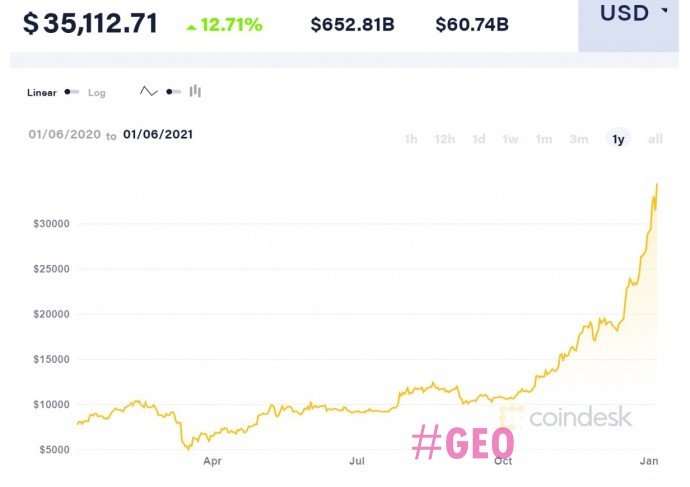
“We count Bitcoin and other cryptocurrencies” digital tulips “. We do not have the capacity to evaluate them. We monitor Bitcoin dynamics as an indicator of speculative excesses”
wrote to Yardeni Research analytics review.
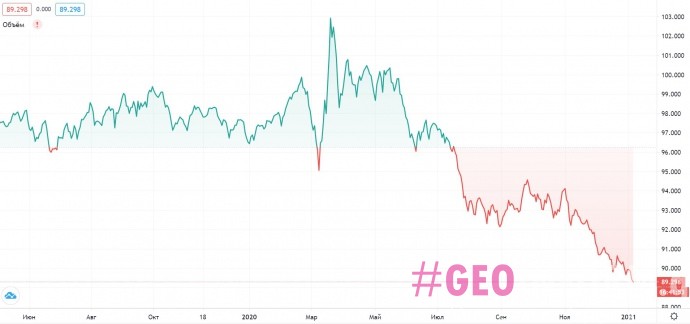
The dollar could fall sharply in 2021
The founder of hedge fund Dymon Asia, Danny Yong, also believes that the dollar may fall sharply in 2021. If this happens, the Fed will lose flexibility on interest rates and may even be forced to pause asset purchases.
“If the dollar collapses, the Fed could run out of easing options, leading to a sell-off in stocks.”
notes Yong.
According to investment banks and asset managers surveyedReuters, COVID-19 ended a decade of a strong dollar.
Read also: Georgian real estate market analysis 2021
According to Aviva Investors chief investment officer Peter Fitzgerald, when the Fed cut interest rates to almost 0%, it deprived the dollar of its advantage in profitability compared to its peers.
Focus on inflation of major currencies
Guggenheim Partners Chief Investment Officer Scott Minerd believes the pandemic has completely changed the free market economic system based on competition, risk management and financial prudence.
“Cycles of more radical monetary intervention, socialization of credit risk, and national moral hazard policies arrived.
This is a concern because behind the curtain is a poor credit environment. The high-yield debt market is trading at 4.5 times trailing 12-month earnings. This ratio exceeds the peak of the 2008-2009 cycle and is likely to worsen”
added a representative from Guggenheim Partners.
The huge infusion of money and large public debt create the risk of the so-called inflation tail (the inertia of inflationary processes in the economy. – Georgia news ) and could have significant negative implications for the valuation of stocks and strategies that have been tested in low-inflation environments, analysts say.
“Most market participants and their portfolios are dependent on decades of disinflation or low inflation. A change in the inflation regime is likely to have significant implications for asset allocation”
Andrew Lowe, director of hedge fund Caxton Associates, says
Against this backdrop, financiers should pay attention to creating balanced portfolios that are resilient to market volatility, says Sam Finkelstein of Goldman Sachs Asset Management.
EU: screw the economy!
As coronavirus panic gripped financial markets in March, the EU central bank announced aggressive stimulus measures to shore up confidence and protect the economy from restrictions imposed to contain the pandemic.
Then governments, including economically prudent ones such as Germany, increased spending to stimulate demand.
Read also: Georgia leads in reduction of air travel in Europe
The speed with which the EU has reversed austerity and increased spending promises good prospects for investment.reported to Reuters, top managers of investment companies.
Investors will invest in developing countries in 2021
Data from the Institute of International Finance show that investors are pouring money into emerging market assets at the fastest pace in almost a decade.
What attracts investors? High profitability? No, just positive returns. JPMorgan estimates that more than 80% of developed world sovereign bonds have negative yields when adjusted for inflation.
“The recovery from the pandemic will be fragile, but loose global monetary policy and vaccine optimism will keep risk assets supported. 2021 could be a great year for emerging market stocks”
says global market strategist Asia Pacific at Invesco David Chao
Bloombergbelieves that the so-called second rally in the stock market of emerging countries has already begun. Over the past nine months, the capitalization of emerging markets has grown more than during the 2016-2018 rally.
Developing countries sold more than $730 billion in bonds in 2020 – this is a record figure. Even the Ukrainian government securities market by the end of the year felt the renewed interest of non-residents.
“Developing countries are supported by unprecedented peacetime US budget deficits and active monetary stimulus, which puts pressure on the dollar.”
According to Somerset Capital Management fund manager Christopher White
Investors and analysts expect the rally to continue in 2021, but they are concerned about how the vaccine rollout will unfold. The issue of vaccine effectiveness will receive more attention than government spending and China's economic recovery.
China will be the clear favorite in the currency and stock markets in 2021
China will be the clear favorite in the currency and stock markets, but in the bond market investors single out Latin American countries.
In the survey, respondents preferred high-yielding Mexican, Brazilian and Indian currencies and bonds, while in the 2020 survey, the favorites were low-yielding assets of South Korea, Thailand and Poland.
Morgan Stanley recommends buying the currencies of China, Mexico, Brazil, Russia, and South African countries, as well as bonds of Ukraine and the Mexican oil company Pemex.
Read also: There will be fluctuations in the lari exchange rate in Georgia in 2021
However, some investors remain wary. Investment-grade credit ratings are at risk in Romania and Mexico, while weak countries face a high risk of default, Citi said.
The Chinese economy was the first to emerge from the crisis
The Chinese economy was the first to emerge from the crisis. Asia maintained its leading position in terms of currencies and equities amid strong recovery from the pandemic.
The benchmark index of Chinese stocks rose 22% in 2020, and the yuan strengthened 6.7% against the dollar. According to forecasts, China's economic growth in 2021 could reach 8.2%.
International investors poured a record amount of funds into Chinese bonds and from January to October 2020 grew up $10.4 billion investment in Greater China equity-focused funds. Doll.
At the same time, the outflow from funds that invest in developing countries amounted to $23.9 billion.
China has long held a special place among developing countries thanks to its unique combination of economic size, growth rate and market depth. The widening economic gap between China and other developing countries is causing some large investors to change their approach to allocating funds to this asset class.writes Bloomberg.
Amid rising client demand, some asset managers are introducing new strategies focused exclusively on China.
Main financial risks in 2021:
What can go wrong when national governments support the population and pump as much liquidity into the market as possible?Analysts at Standard Chartered Bank They believe that there are reasons for concern. They predicted Main financial risks in 2021:
- First. Monetary and fiscal stimulus could lead to the fastest economic recovery in 100 years. In an effort to take advantage of rising real asset prices, investors and traders are increasingly investing in commodities and metals. As a result, copper prices could rise by 50%.
- Second. Split in OPEC. In an effort to solve financial problems, oil exporters refuse to comply with production quotas, and the OPEC alliance collapses. In this case, oil prices will fall to $20 per barrel.
- Third. The EU's fiscal stimulus is falling short. The ECB's ability to support economic recovery is increasingly questionable with interest rates at zero and a balance sheet close to 100% of GDP. Therefore, by the middle of the year, the euro may fall in price against the dollar from the current 1.21 to 1.06.
- Fourth. The risk of insolvency in rising markets remains high. Corporate defaults will lead to a decline in credit ratings. As a result, by the second quarter of 2021, equity markets in developing countries could fall by 30%.
- Fifth. Новый президент США Джозеф Байден останавливает торговую войну с Китаем. Пекин позволяет своей валюте укрепляться, рассчитывая повысить покупательную способность своих компаний и потребителей. В результате курс доллара к юаню падает до 6 с нынешних 6,53.
- Sixth. The US is abandoning its strong dollar policy. If Congress refuses to cooperate on a fiscal package, new Treasury Secretary Yellen could weaken the dollar to ease financial conditions. As a result, the dollar could lose 15%.
- Seventh. The most unlikely prediction. Confused by his inability to overcome differences between Republicans and Democrats, as well as protests and social tensions, Biden resigns and is replaced by Vice President Kamala Harris. There is a sharp correction in US stocks, credit spreads are widening, and the dollar's decline is accelerating.
- Eighth. In the state of Georgia, the Senate runoff elections took place on January 5th. The Democratic Party gained control of the Senate. One of the Democrats' first initiatives could be tax increases and changes in regulation of the technology sector.
As a result, Standard Chartered predicts, technology stocks will collapse and Treasury yields will rise amid fears of rising stock supply.
Read also: Forecast of GDP, trade balance and inflation rate in Georgia 2021
The bank's concerns about a possible fall in the technology sector are shared by investment companies.
“US tech stocks boom – it is a bubble that will burst when interest rates rise or disappear” excessive abundance “in the tech sector”, – stated Chief Investment Officer of Amundi Pascal Blanc.
Old economic problems will not go away in 2021
The Atlantic Council think tank calls the main risks of 2021 the slow distribution of the vaccine and Biden's inability to govern the United States. Analysts also admit the development of a new global financial crisis caused by debt.
“Global debt, especially in developing countries, is growing rapidly. Total debt increased by $15 trillion by the end of 2020 and is expected to reach 365% of global GDP by the end of the year.
For countries that are developing, necessary $7 trillion to pay off debt by the end of 2021 “
recall experts from the Atlantic Council think tank
In an attempt to stem the growing crisis, the G20 has initiated debt relief for some countries, but the reluctance of the US Congress to approve any new resources for the IMF could undermine those efforts.
In addition, the UNwarned that the world is on the brink of the worst food crisis in fifty years as the pandemic affects global food supply chains.
Poforecasts UN, COVID-19-related malnutrition will kill more people than the coronavirus itself.
Leave a comment